Choosing the right Livestock Medical Syringe is essential for effective animal care. The livestock industry demands precision and flexibility in veterinary practices. According to industry reports, around 70% of livestock health improvements come from proper medical administration. A leading expert in veterinary tools, Dr. Emily Carter, emphasizes, "The right syringe ensures a better health outcome for livestock."
Various types of syringes are available, each serving distinct purposes. For example, some are designed for large doses while others focus on accuracy with smaller volumes. Many farmers struggle to choose the best option, reflecting on their past experiences. Poor syringe choices can lead to stress in animals and inaccurate treatments.
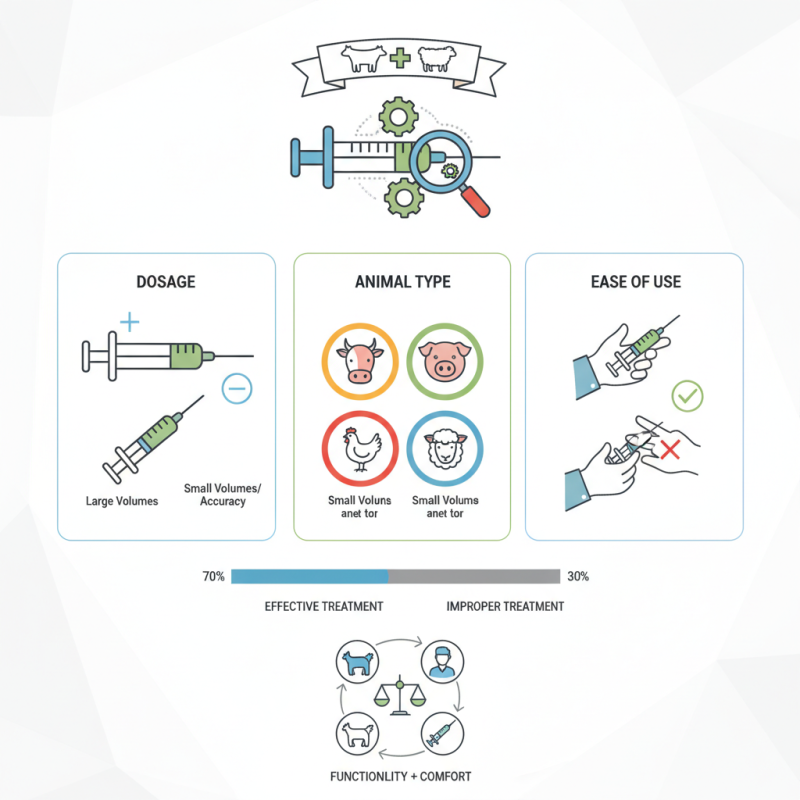
Selecting a Livestock Medical Syringe requires careful consideration. Factors such as dosage, animal type, and ease of use should guide decisions. While many options exist, not all will meet specific needs. Striking a balance between functionality and comfort is crucial for both the animals and the veterinarians working with them.
Criteria for Selecting Livestock Medical Syringes Based on Animal Type
Choosing the right livestock medical syringe involves understanding the needs of different animal types. Cattle require larger syringes, often with higher capacity. These animals typically receive larger doses of medication. In contrast, smaller breeds, such as goats or sheep, benefit from more compact syringes. Their doses are smaller, and a precise delivery is essential.
For poultry, ultra-fine syringes with smaller needles are recommended. Chickens and ducks need minimal discomfort during administration. A too-large syringe can cause stress and injury. Equally, the design should allow for easy handling, especially in a busy barn environment. Considerations for the user are just as important as the syringes themselves.
Frequent issues arise from improper selection. Feeding and health routines can be disrupted by inefficient tools. Users might find that a syringe doesn't function well, which can lead to wasted medication and increased animal stress. Reflecting on previous experiences can guide future choices. Understanding these unique requirements is critical for effective healthcare in any livestock setting.
Understanding the Different Types of Syringes Used in Veterinary Medicine
When selecting a livestock medical syringe, understanding the different types available is crucial. Veterinary medicine utilizes various syringe designs tailored for specific needs. For instance, standard syringes come in sizes ranging from 1 mL to 60 mL. They are commonly used for vaccinations and medications. A report from the American Veterinary Medical Association highlights that precise dosing is vital, as errors can negatively impact animal health.
Besides standard syringes, there are automatic and multi-dose syringes. Automatic syringes save time and reduce stress on the animal. They allow for rapid administration of medication, particularly in large herds. According to the Journal of Animal Science, the use of automatic systems has increased efficiency by up to 30% in some operations. Multi-dose syringes, on the other hand, are designed to hold several doses. This is especially useful for frequent treatments. However, proper hygiene is essential to prevent contamination.
Choosing the right syringe requires careful consideration. Factors such as the animal’s size, type of medication, and the environment should influence your decision. Reflecting on these factors is essential. Regular training and updates on veterinary practices can help veterinarians make informed choices. Understanding the nuances of each syringe type enhances the quality of care provided to livestock.
Comparison of Different Types of Livestock Medical Syringes
Evaluating the Importance of Dose Accuracy in Livestock Syringe Selection
When selecting a livestock syringe, dose accuracy is critical. Accurate dosing ensures your animals receive the correct medication. Under-dosing can lead to treatment failures. Over-dosing can cause adverse effects. This balance is vital for effective livestock management.
Consider the syringe design. Some models offer adjustable dose settings. This feature allows for precision when administering various medications. Choose a design that fits your needs and minimizes waste. A comfortable grip can also reduce stress during the process.
Tips:
- Regularly calibrate your syringe. This ensures consistent dosing over time.
- Use marked calibrations on the syringe for quick reference.
- Keep syringes clean and well-maintained. This improves accuracy and extends lifespan.
Evaluate your specific requirements. Do you need a multi-dose syringe or single-use? Think about the species you're treating, as their size and temperament can influence your choice.
Small inaccuracies in dosing may stack up over time. Moreover, reflect on your own experience – have you encountered any issues previously with dosage? An honest assessment can guide better decisions.
Material and Design Considerations for Durable Livestock Syringes
When selecting a livestock medical syringe, the material and design are crucial for performance and longevity. Stainless steel is a popular choice due to its durability and resistance to corrosion. Plastic syringes can be lightweight and easy to handle, but they may lack the same longevity. Think about your needs. If you handle large volumes, a sturdy option is essential.
Design also plays a major role. Look for ergonomic handles that provide a comfortable grip. A syringe that is easy to maneuver can reduce fatigue during use. Consider the size of the barrel. A larger barrel allows for more fluid but can be heavier. Test different designs to find what feels right in your hand.
It’s worth noting that not all syringes perform equally. Some may clog easily, leading to wasted medication. Pay attention to the plunger action; a smooth plunger is important for accuracy. When reflecting on your experiences, consider if your current syringe meets all your needs. Regular assessment of your tools helps improve your effectiveness in livestock care.
How to Choose the Best Livestock Medical Syringe for Your Needs? - Material and Design Considerations for Durable Livestock Syringes
| Syringe Type |
Material |
Capacity (ml) |
Needle Size |
Durability |
| Standard Syringe |
Plastic |
60 |
18G |
Moderate |
| Insulin Syringe |
Glass |
1 |
25G |
High |
| Automatic Syringe |
Stainless Steel |
30 |
20G |
Very High |
| Multi-Dose Syringe |
Plastic |
100 |
16G |
Moderate |
| Hypodermic Syringe |
Plastic |
10 |
22G |
Low |
Industry Standards and Regulations Impacting Livestock Syringe Usage
When selecting a livestock medical syringe, understanding industry standards and regulations is crucial. These guidelines help ensure animal welfare and product efficacy. For instance, regulations often dictate the materials used in syringes, ensuring they are safe for both animals and humans. Compliance with these standards can significantly affect the reliability of the syringe during medical procedures.
Veterinarians and farm operators should also be aware of the labeling requirements for syringes. Accurate labeling ensures proper dosage and administration, reducing the risk of medication errors. Furthermore, these regulations can vary by region, which may complicate compliance. It’s essential for operators to stay updated on local laws, as ignorance can lead to serious consequences.
Additionally, many livestock syringes are designed with specific functions in mind. Some are better suited for vaccinations, while others might excel in fluid delivery. Understanding these specifications helps users choose the right tool. Experimental use of the wrong syringe type can lead to inadequate treatment, highlighting the importance of making informed decisions. Ultimately, a thorough knowledge of these standards leads to better outcomes in livestock care.
FAQS
: Cattle require larger syringes due to their larger medication doses.
Smaller breeds like goats need compact syringes for precise medication delivery.
Poultry requires minimal discomfort, and fine needles reduce stress during administration.
Look for ergonomic handles for comfort and easy maneuverability during use.
Stainless steel is durable, while plastic is lightweight but may not last as long.
Yes, poor tool choices can disrupt feeding and health routines for animals.
Think about past experiences to guide your future selections and improve care.
Clogging leads to wasted medication, which can increase animal stress.
Smooth plunger action is crucial for accurate medication delivery.
Yes, regularly checking your tools helps ensure they meet your current needs.
Conclusion
When selecting a Livestock Medical Syringe, it is essential to consider various criteria based on the specific animal type to ensure effective and safe administration. Different types of syringes are designed for diverse applications in veterinary medicine, highlighting the importance of understanding their functionalities before making a choice. Dose accuracy is another critical factor, as it directly impacts the health and well-being of livestock, necessitating careful evaluation to prevent overdosing or underdosing.
Additionally, the materials and design of the Livestock Medical Syringe play a significant role in its durability and ease of use. Selecting syringes made from robust materials can enhance their longevity, making them suitable for the rigors of animal health care. Furthermore, awareness of industry standards and regulations is crucial, as these guidelines influence the appropriate usage and safety measures associated with livestock syringes. By thoroughly considering these aspects, users can make informed decisions that best meet their livestock care needs.

 WANJIA